Real questions. Measured answers.
Five engineering studies comparing impeller designs, reactor geometries, spacing, baffles, and multi-configuration optimization — all measured with RPT-AI. Each study includes the engineering question, key results, and the real data tables.
Agitator Design
Engineering Question
Which impeller performs better: Rushton turbine or propeller?
Results
- Faster mixing (τ⁻¹) with Rushton turbine
- Higher radial pumping
- Higher wall velocity
Conclusion
The Rushton turbine outperforms the propeller across all mixing indicators.
Time to Insight
2 configurations tested in 2 days
Measured Flow Fields
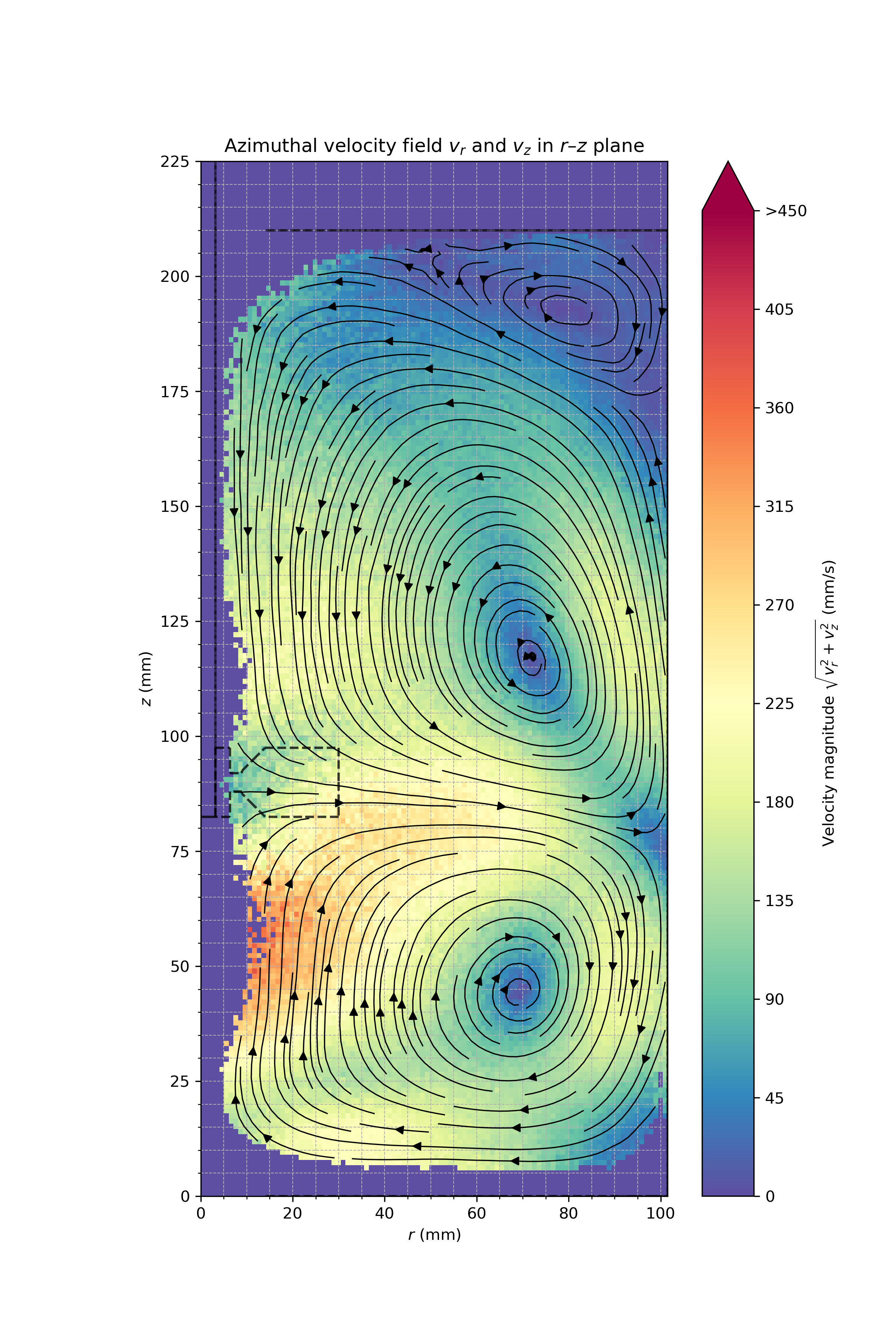
A — Rushton turbine
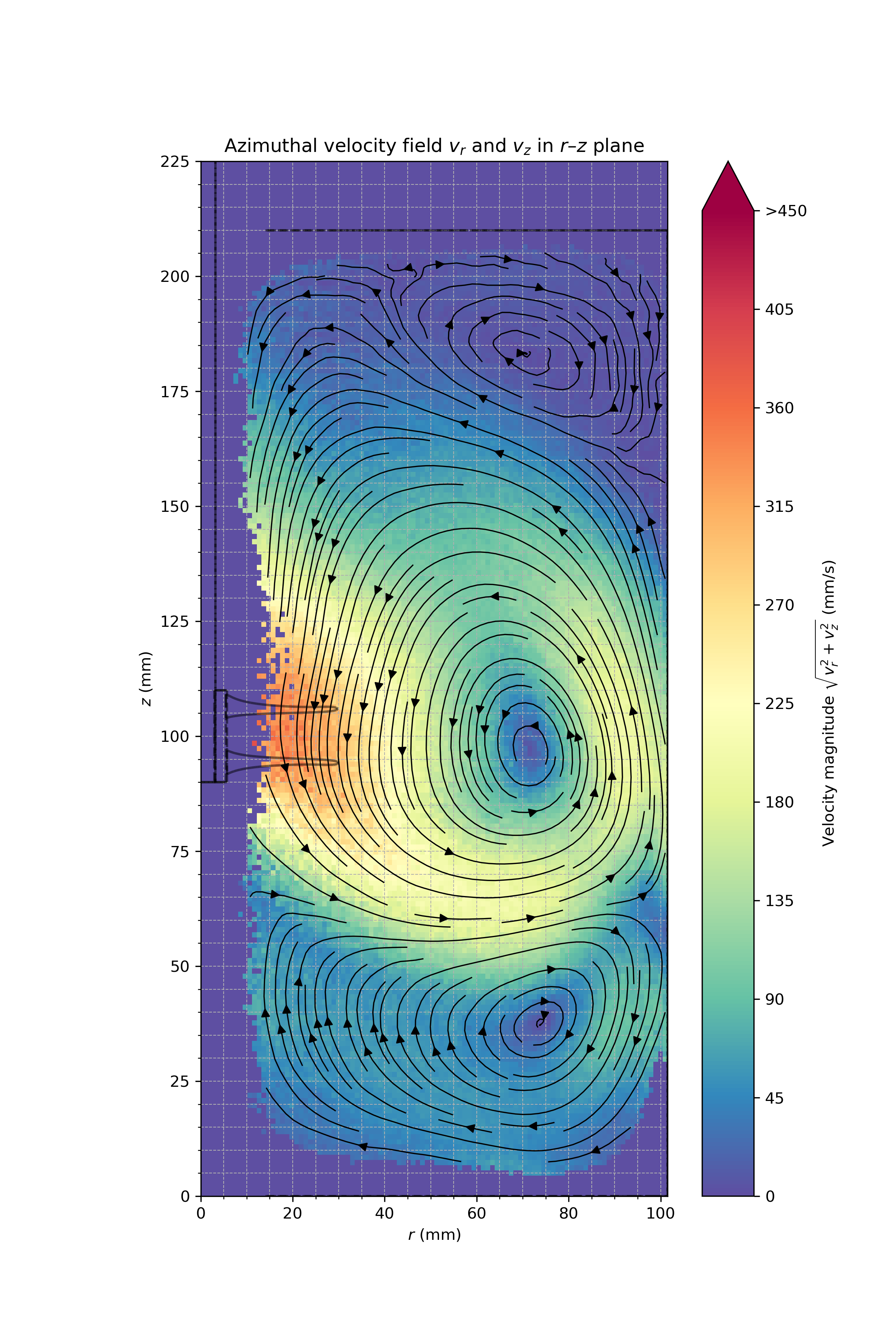
B — Propeller
Measured Data
| Label | Velocity | Agitator | Bottom | Baffles | Power | τ⁻¹ | Max Axial | Max Radial | Mean Wall Vel. |
|---|---|---|---|---|---|---|---|---|---|
| RPM | W | s⁻¹ | L/s | L/s | m/s | ||||
| A (500 RPM) | 500 | Rushton | Square | No | 5.2 | 0.783 | 2.19 | 4.19 | 171.4 |
| B (500 RPM) | 500 | Propeller | Square | No | 3.5 | 0.310 | 2.15 | 3.06 | 110.7 |
Bottom Geometry
Engineering Question
Does the shape of the reactor bottom affect mixing with a Rushton turbine?
Results
- Mixing: similar in both cases
- Axial pumping higher with flat bottom
- Wall velocity higher with flat bottom
Conclusion
The flat bottom outperforms the rounded bottom for flow circulation — a counterintuitive insight revealed by measurement.
Time to Insight
2 configurations tested in 2 days
Measured Flow Fields
A — Square (flat) bottom
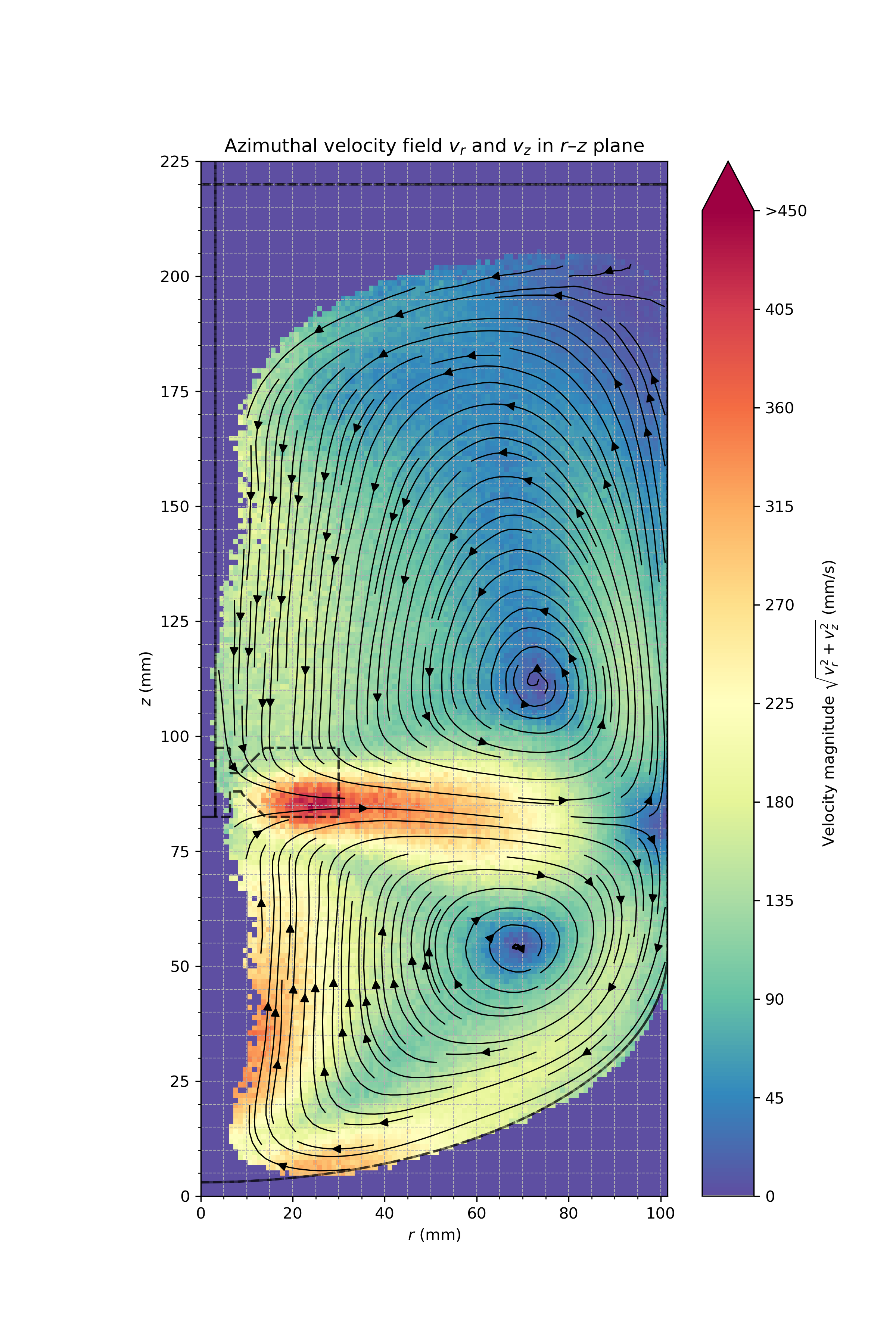
C — Ellipsoid bottom
Measured Data
| Label | Velocity | Agitator | Bottom | Baffles | Power | τ⁻¹ | Max Axial | Max Radial | Mean Wall Vel. |
|---|---|---|---|---|---|---|---|---|---|
| RPM | W | s⁻¹ | L/s | L/s | m/s | ||||
| A (500 RPM) | 500 | Rushton | Square | No | 5.2 | 0.783 | 2.19 | 4.19 | 171.4 |
| C (500 RPM) | 500 | Rushton | Ellipsoid | No | 4.6 | 0.772 | 1.75 | 3.54 | 166.2 |
Impeller Spacing
Engineering Question
Does the distance between two Rushton turbines affect mixing?
Results
- 3× better mixing with closer spacing (H/3)
- Lower wall velocity and pumping
Conclusion
Better mixing: H/3. Better wall heat transfer: H/2.
Time to Insight
2 configurations tested in 2 days
Measured Flow Fields
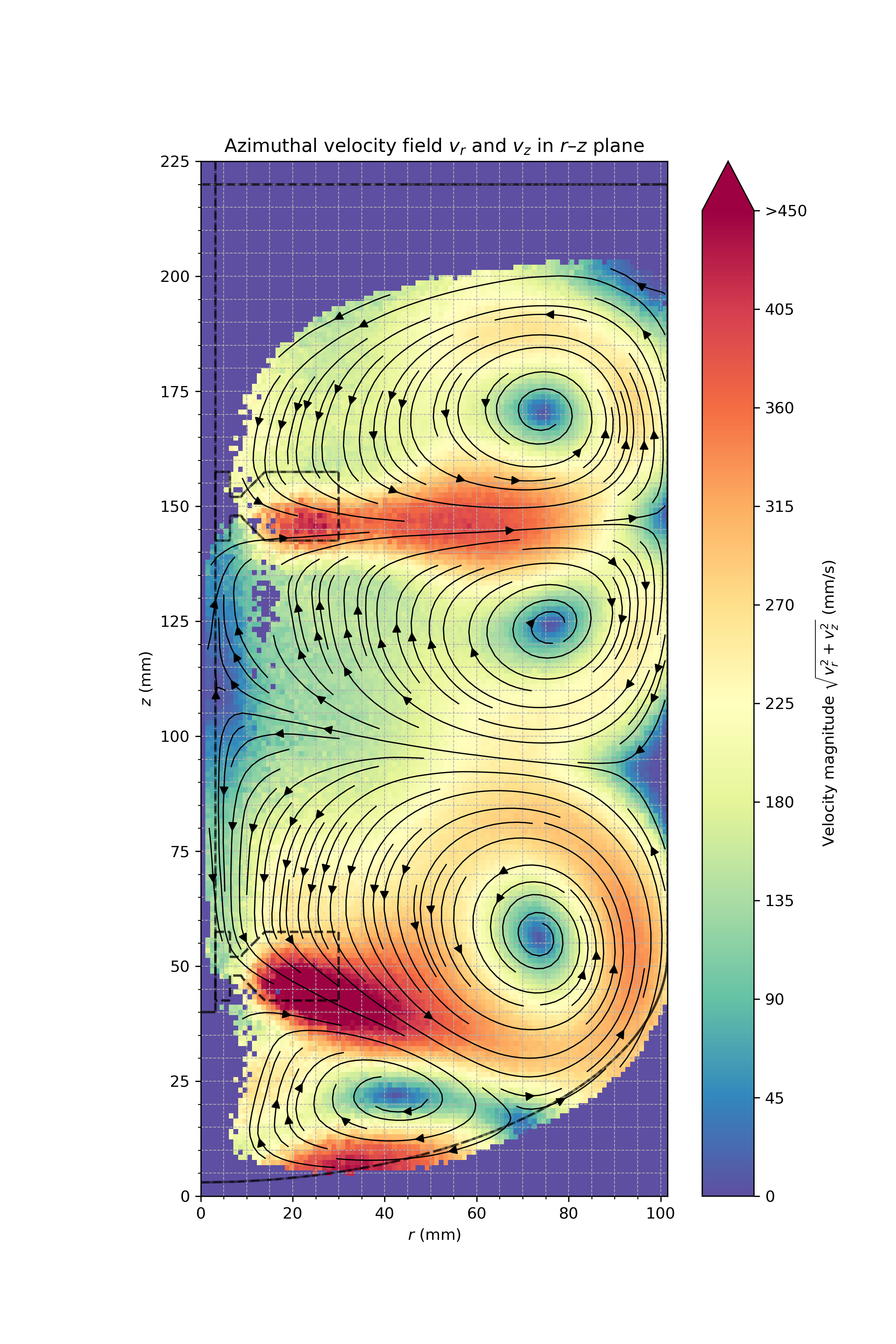
E — H/2 spacing
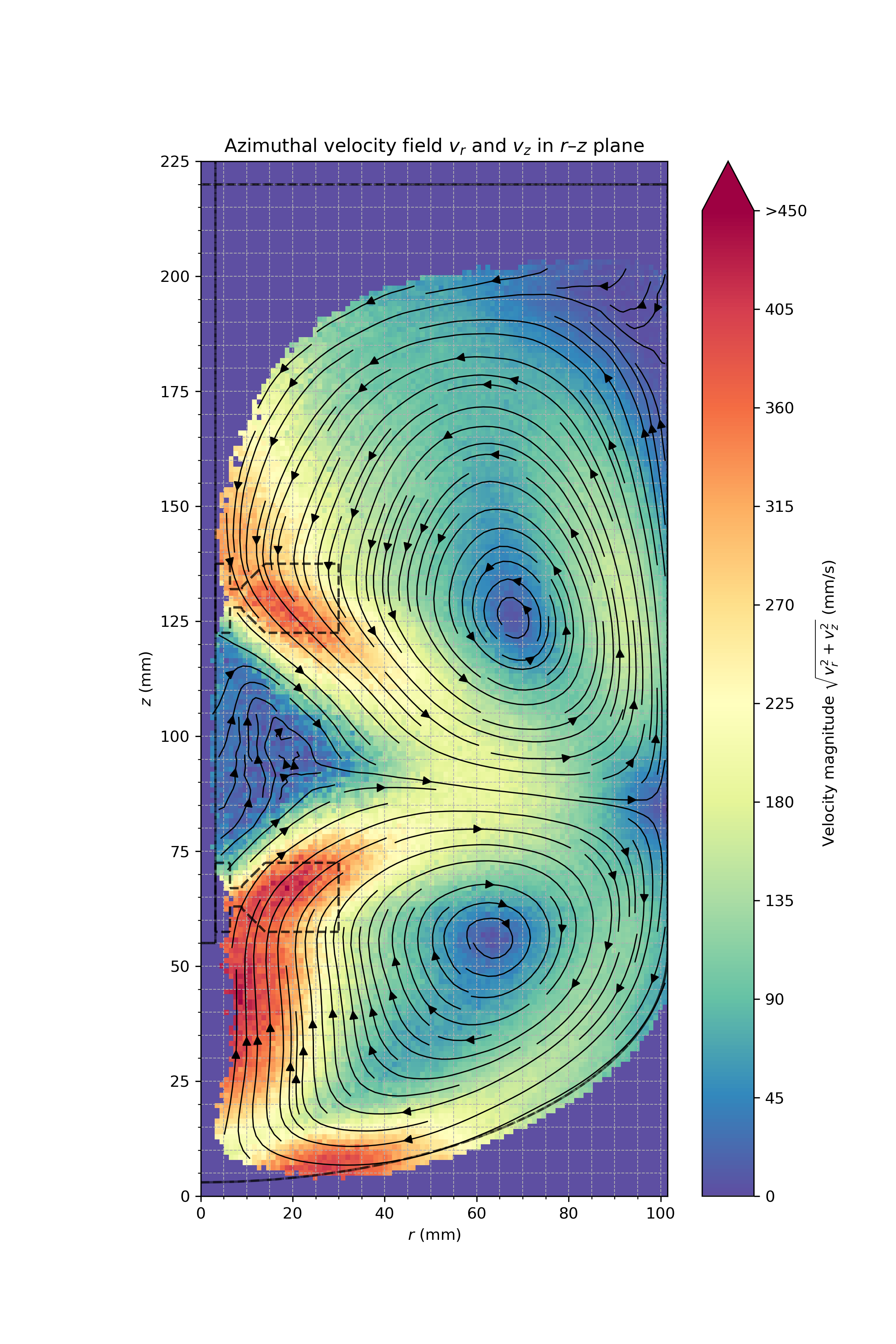
F — H/3 spacing
Measured Data
| Label | Velocity | Agitator | Bottom | # Agitators | Power | τ⁻¹ | Max Axial | Max Radial | Mean Wall Vel. |
|---|---|---|---|---|---|---|---|---|---|
| RPM | W | s⁻¹ | L/s | L/s | m/s | ||||
| E (500 RPM) | 500 | Rushton | Ellipsoid | 2 | 4.9 | 0.390 | 3.31 | 8.34 | 233.8 |
| F (500 RPM) | 500 | Rushton | Ellipsoid | 2 | 4.7 | 1.176 | 1.86 | 3.32 | 171.3 |
Effect of a Baffle
Engineering Question
How does adding a baffle affect the flow field and mixing performance?
Results
- Mixing improves with the baffle (higher τ⁻¹)
- Radial and axial pumping increase with the baffle
- Wall velocity decreases with the baffle
Conclusion
If mixing is the priority → baffled is better. If wall heat transfer is critical → unbaffled may perform better.
Time to Insight
2 configurations tested in 2 days
Measured Flow Fields
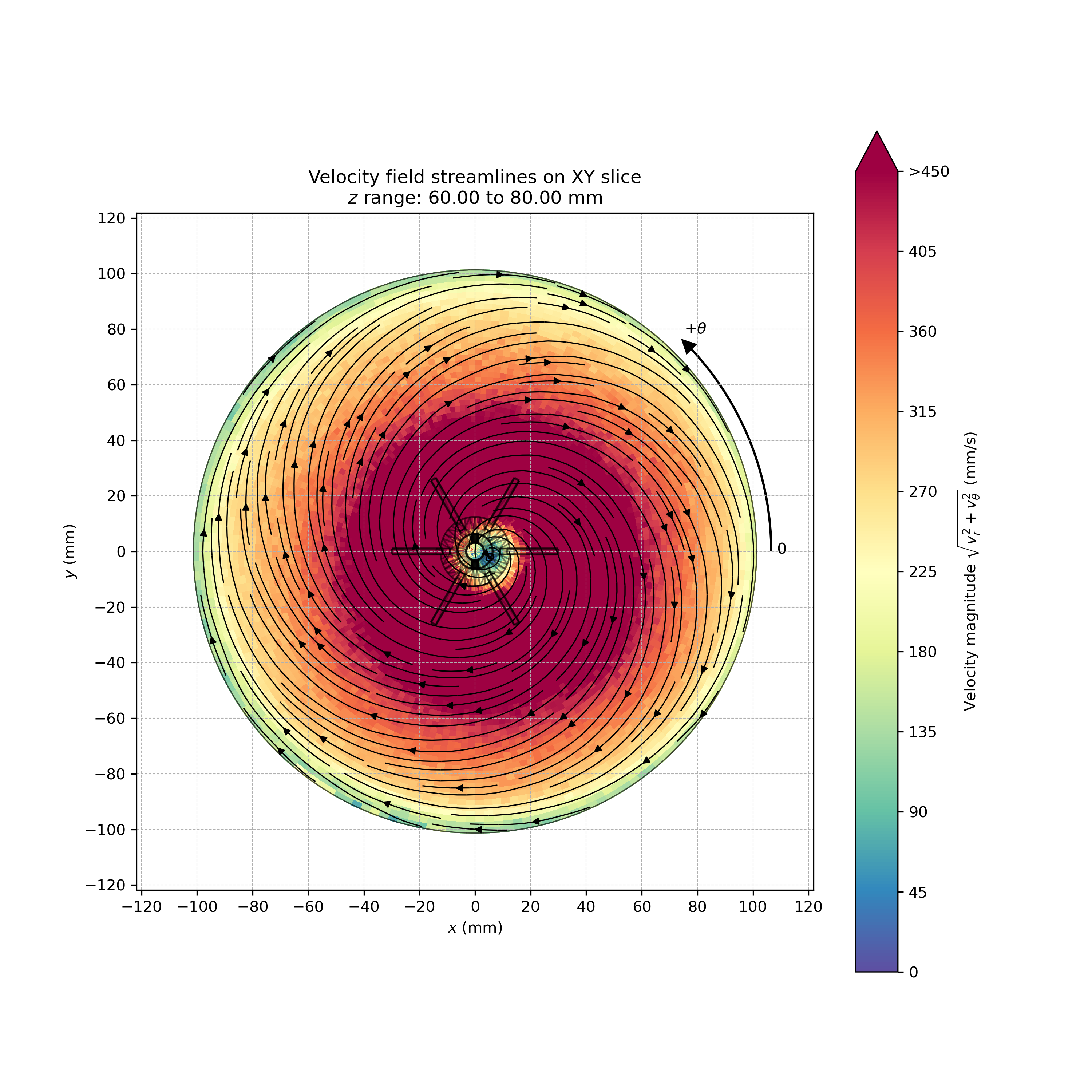
F — Unbaffled
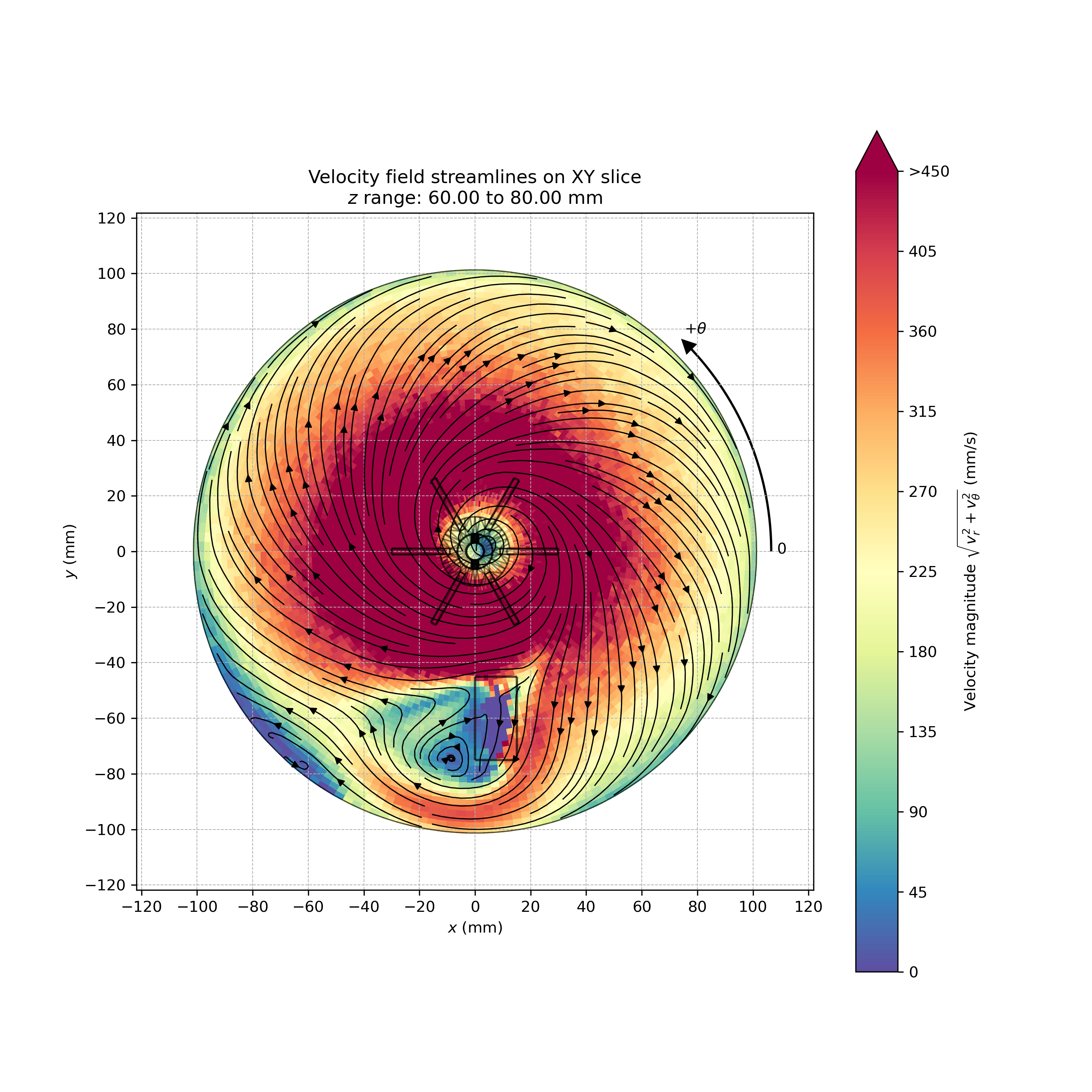
H — Baffled
Measured Data
| Label | Velocity | Agitator | Bottom | # Agitators | Baffles | Power | τ⁻¹ | Max Axial | Max Radial | Mean Wall Vel. |
|---|---|---|---|---|---|---|---|---|---|---|
| RPM | W | s⁻¹ | L/s | L/s | m/s | |||||
| F (500 RPM) | 500 | Rushton | Ellipsoid | 2 | No | 4.7 | 1.176 | 1.86 | 3.32 | 171.3 |
| H (500 RPM) | 500 | Rushton | Ellipsoid | 2 | Yes | 5.7 | 1.200 | 2.23 | 3.28 | 155.5 |
Multi-Configuration Optimization
Engineering Question
Which agitator configuration delivers the best performance for mixing, heat transfer, or pumping?
Results
- Best mixing efficiency: Configurations F and H
- Best heat transfer potential: Configuration E
- Best axial pumping: Configurations D and E
Conclusion
The optimal configuration depends on the process objective. RPT-AI allows engineers to compare many configurations and identify the best operating point.
Time to Insight
30 configurations tested in 34 days (including calibration)
Measured Flow Fields
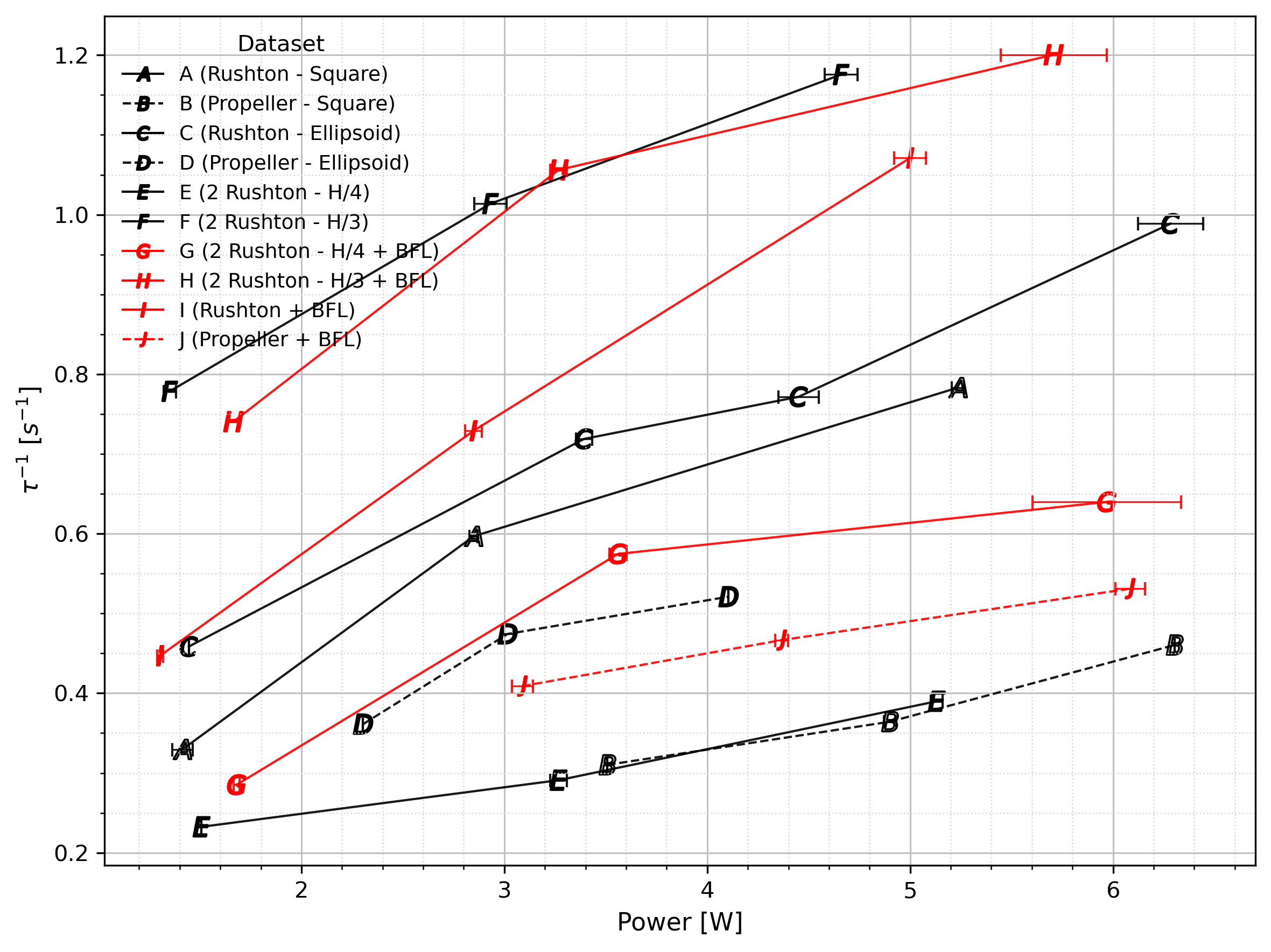
Mixing rate (τ⁻¹) vs Power
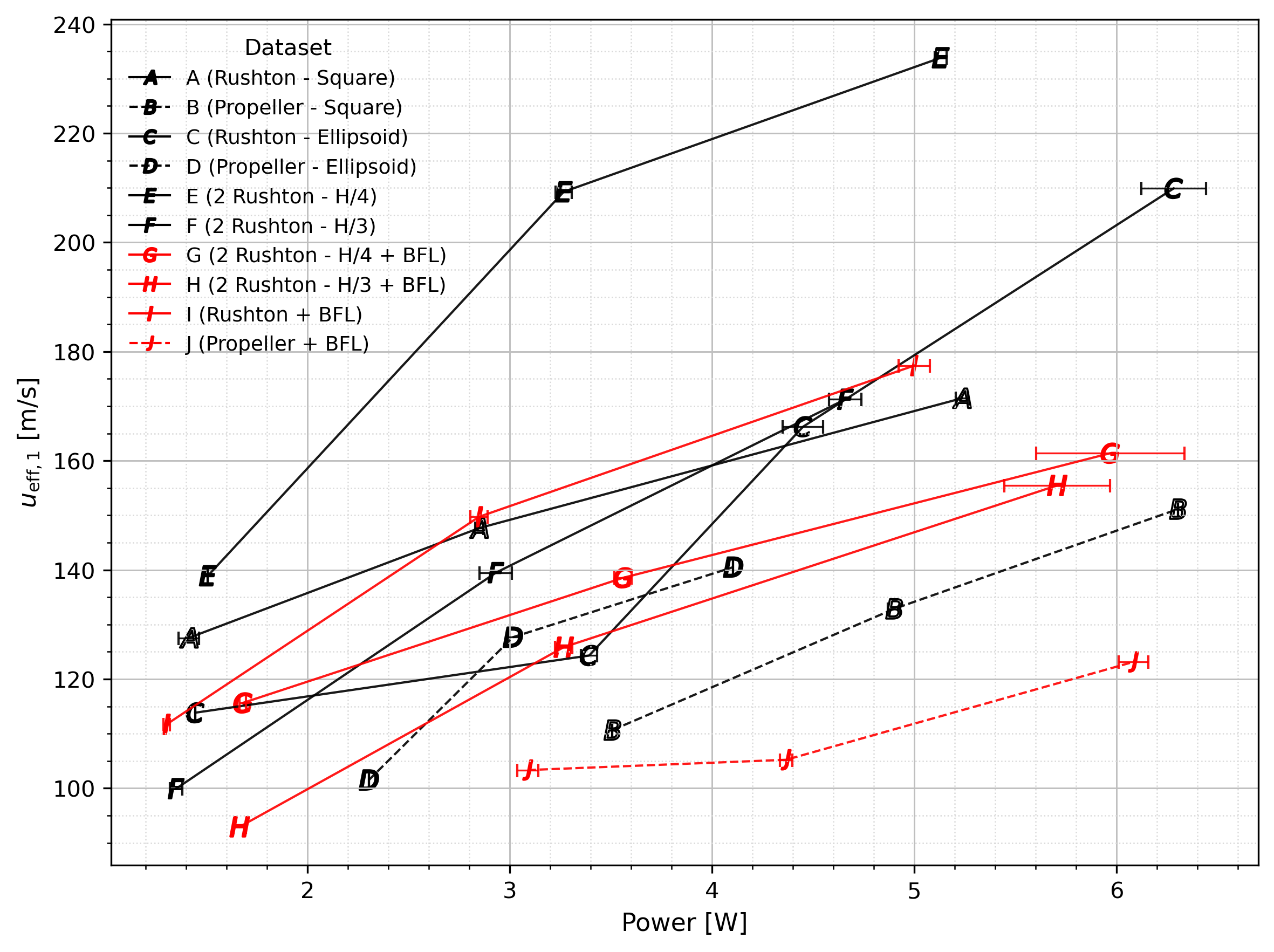
Mean wall velocity vs Power
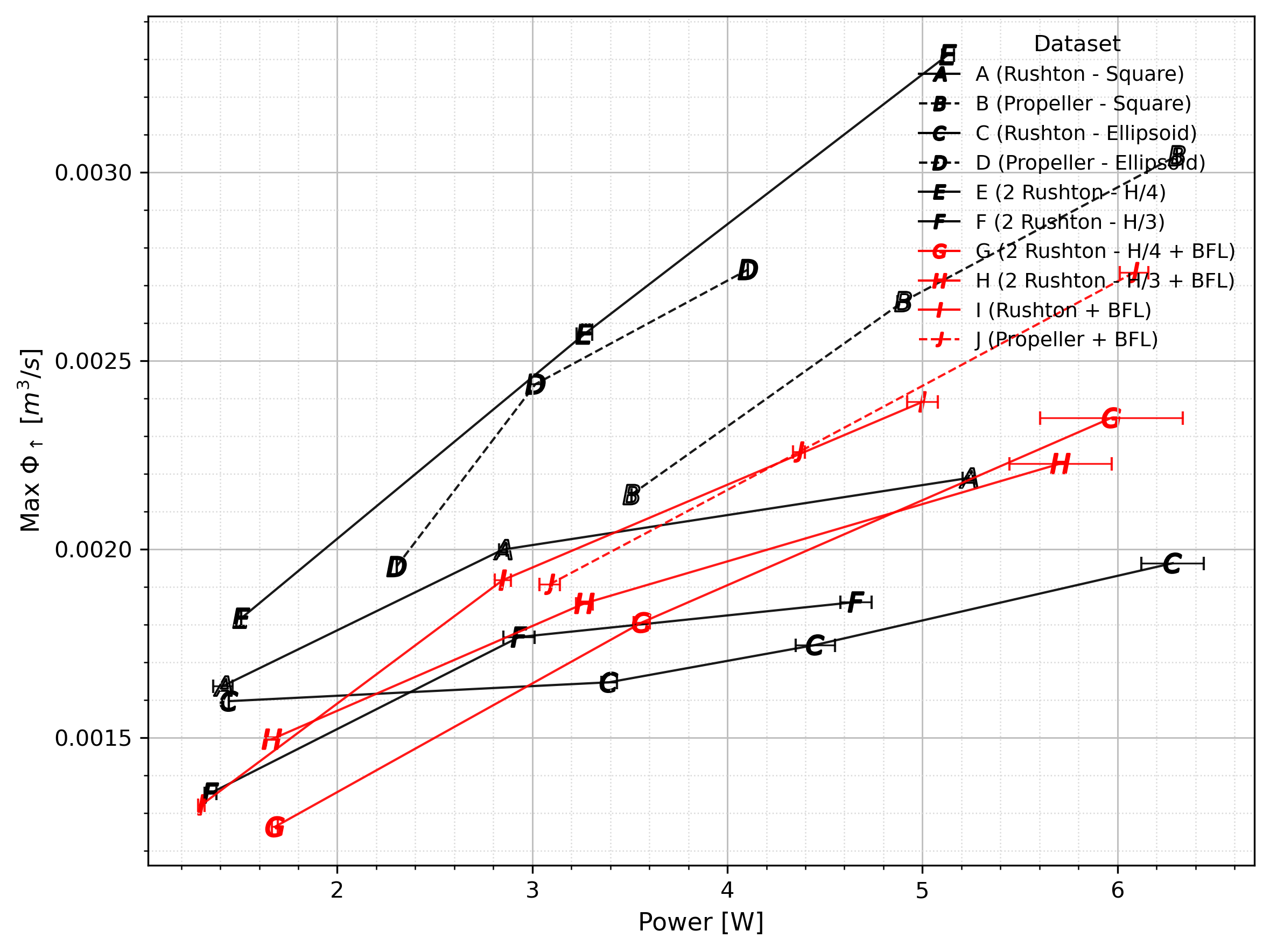
Max axial pumping vs Power
Have an engineering question?
Book a technical assessment and get measured answers for your specific reactor configuration.